Annual Meeting of the Canadian Council of Forest Ministers
CANADIAN COUNCIL OF FOREST MINISTERS MEET IN BRITISH COLUMBIA TO DISCUSS CHALLENGES FACING CANADA’S FOREST SECTOR
Langford, British Columbia, June 4, 2026 – Federal, provincial, and territorial forest Ministers convened today to strengthen joint initiatives and address shared challenges alongside new prospects within Canada’s forest sector. The meeting was led by the Honourable Ravi Parmar, Minister of Forests for the Government of British Columbia and current Chair of the Canadian Council of Forest Ministers (CCFM).
Ministers reiterated their firm opposition to the unwarranted U.S. duties and tariffs on softwood lumber. They recognized the ongoing challenges faced by forest sector employees and their families during this transformative time for the industry. Ministers remain dedicated to working collaboratively with the sector, its stakeholders, and Indigenous communities, to bolster its resilience and strengthen its position to seize new opportunities, both within Canada and abroad.
Ministers welcomed Canadian Forest Sector Transformation Task Force Co-Chairs Ken Kalesnikoff (Kalesnikoff Mass Timber) and Frédéric Verreault (Chantiers Chibougamau), established by Canada’s Minister of Energy and Natural Resources, for a discussion on the recommendations included in their recent report. Ministers noted the importance and need for Canadian forest products to remain a trusted choice.
As part of today’s discussions, Ministers acknowledged the continuing trend of severe wildland fire events in Canada and the resulting challenges that comes with it. Ministers reiterated the need to work together to strengthen Canada’s wildland fire preparedness, mitigation and response for years to come. As of today, the CCFM has built on the work announced in June 2024 – when it introduced the release of the first Canadian Wildland Fire Prevention and Mitigation Strategy[1] by now releasing the first Pan-Canadian Wildland Fire Risk Assessment Framework. This framework will support a consistent, holistic, and proactive approach to assessing wildland fire risk across Canada.
Today’s meeting also saw Ministers make progress on defining forest degradation, reinforcing Canada’s continued leadership in sustainable forest management while maintaining healthy and productive forests for future generations.
As the meeting’s final order of business, the Honourable Todd Loewen, Minister of Forestry and Parks, Alberta accepted the role of CCFM Chair for 2026-27.
“Alberta is proud to take on the role of Chair of the Canadian Council of Forest Ministers at a pivotal
time for our forest sector. By working collaboratively, we strengthen our response to challenges like wildland fire, and trade pressures, while supporting a resilient, competitive forest sector that sustains jobs and communities across the country. Together, we assure that our forests are sustainably managed for future generations, and Canada’s forest products remain a trusted choice in global markets.”
Minister Loewen,
Minister of Forestry and Parks for Alberta
“It’s been an honour to serve Canadians as Chair of the Canadian Council of Forest Ministers,” said Ravi Parmar, British Columbia’s Minister of Forests. “As I pass the baton to Minister Loewen, I trust he shares my belief in a Team Canada approach to forestry and remains committed to standing up for Canada. Our workers, communities and forest sector are counting on it.”
Ravi Parmar,
Minister of the Ministry of Forests of British Columbia
About the CCFM
The CCFM was established in 1985 to provide a platform for federal, provincial and territorial governments to work together on common concerns relating to forests. The CCFM provides leadership on national and international issues and sets direction for the stewardship and sustainable management of forests across Canada (www.ccfm.org).
For more information, media please contact:
BC Ministry of Forests
Forests Media Line
250-380-8491
Forest.Media@gov.bc.ca
[1] Québec contributes to the work of the CCFM according to its priorities and in accordance with its jurisdiction over forest management. As Québec is already actively engaged in forest fire prevention and mitigation within its territory, Québec does not adhere to the Canadian Wildland Fire Prevention and Mitigation Strategy or the initiatives stemming from it. In this regard, Québec is also not bound by the Strategy’s targets, objectives, and commitments.
Related Resources
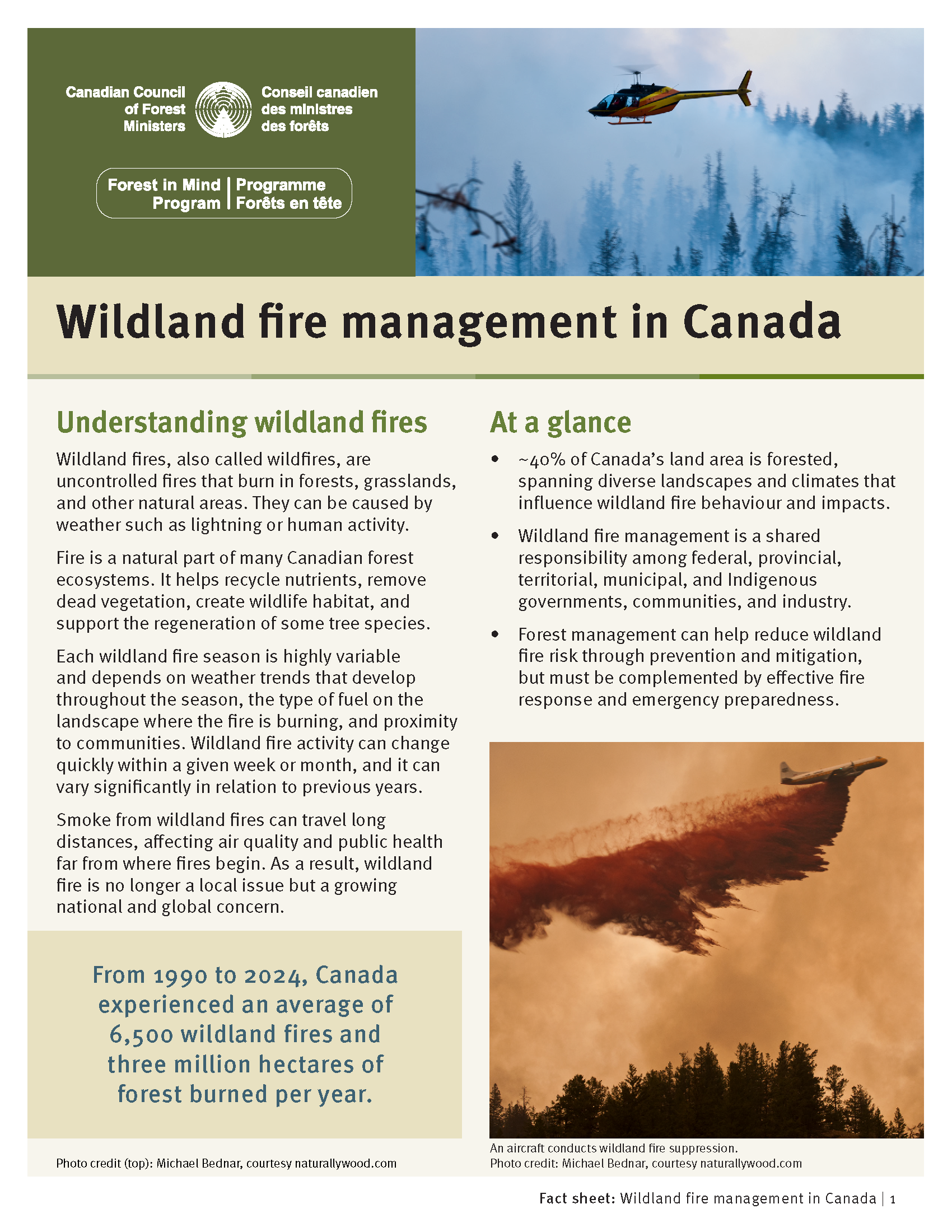
Wildland Fire Management in Canada
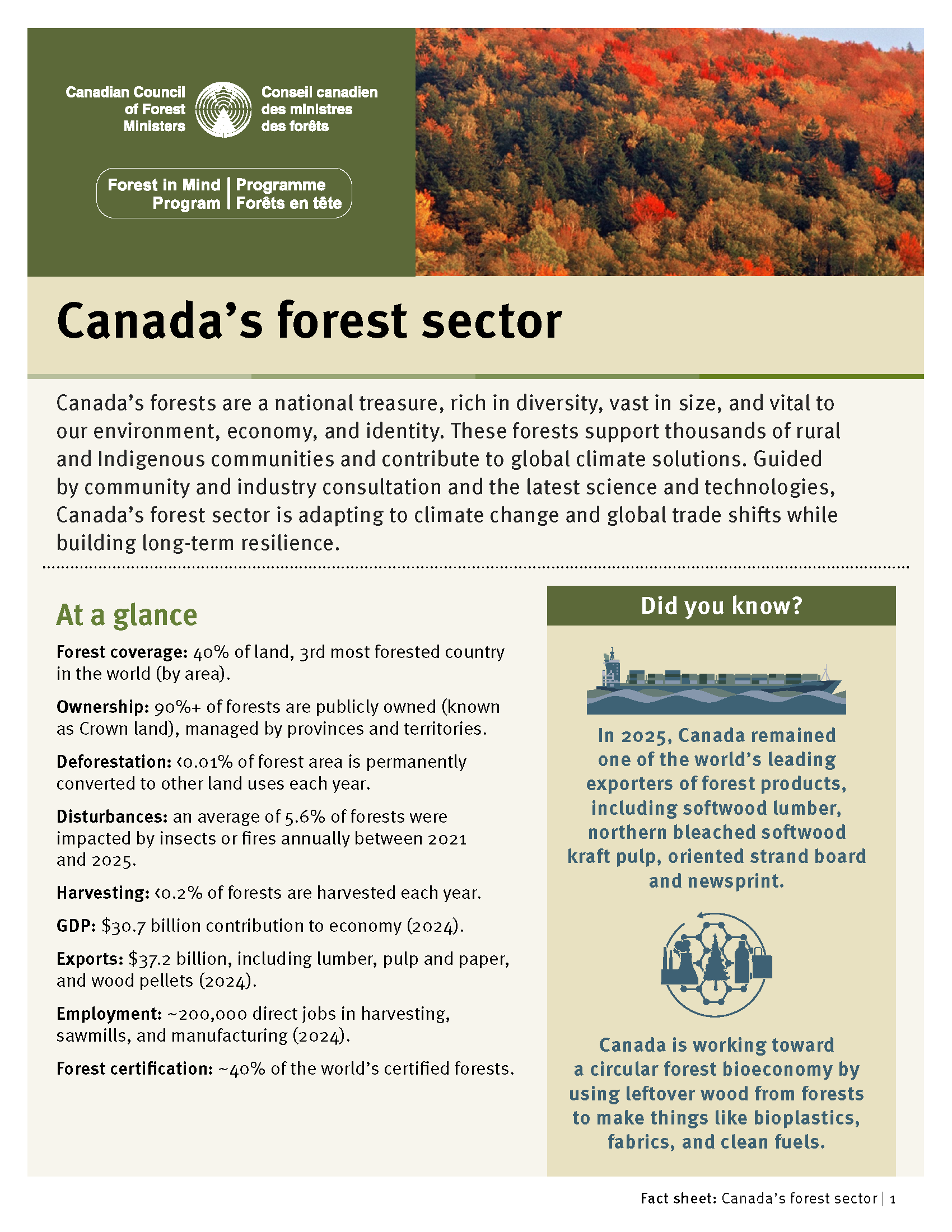
Canada's Forest Sector
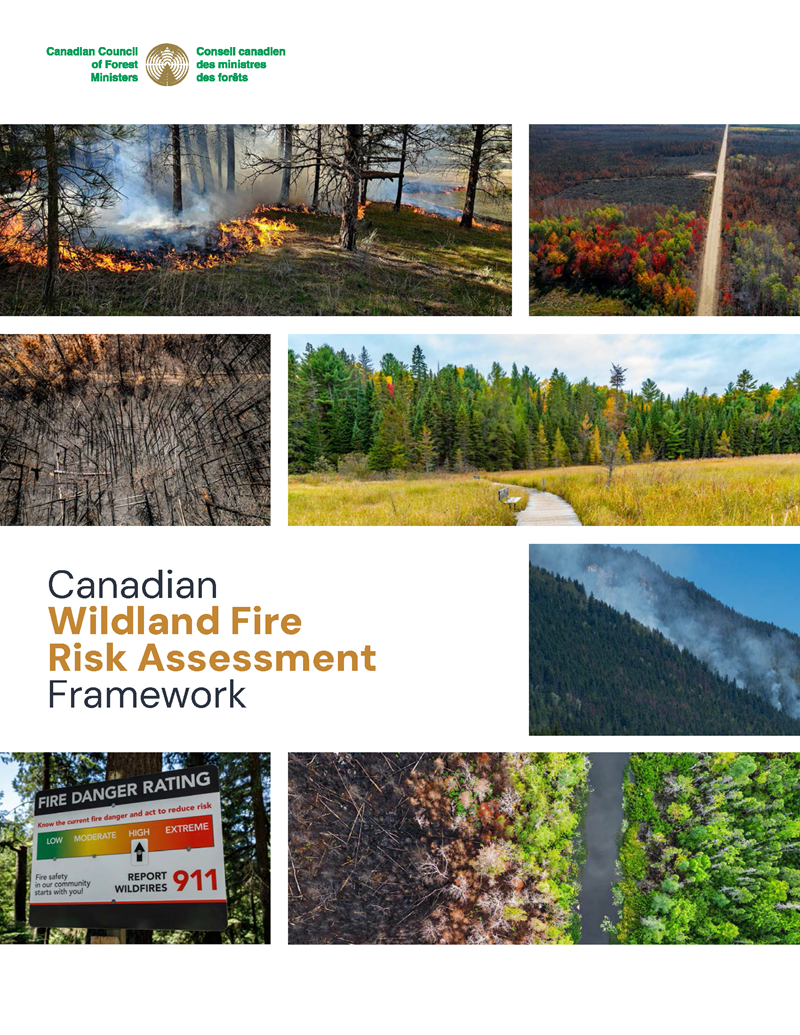
Canadian Wildland Fire Risk Assessment Framework
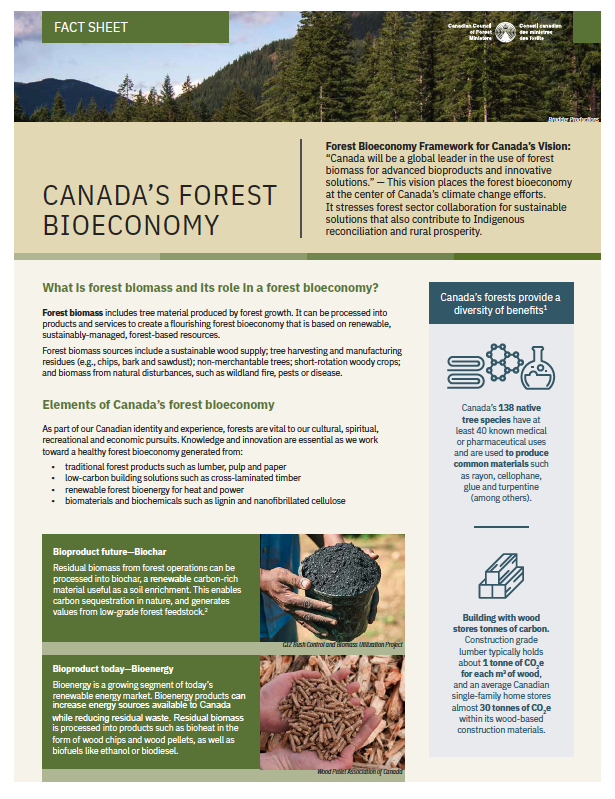
Canada's Forest Bioeconomy
CCFM FPWG Spongy Moth Risk Assessment
National Forest Pest Strategy
